
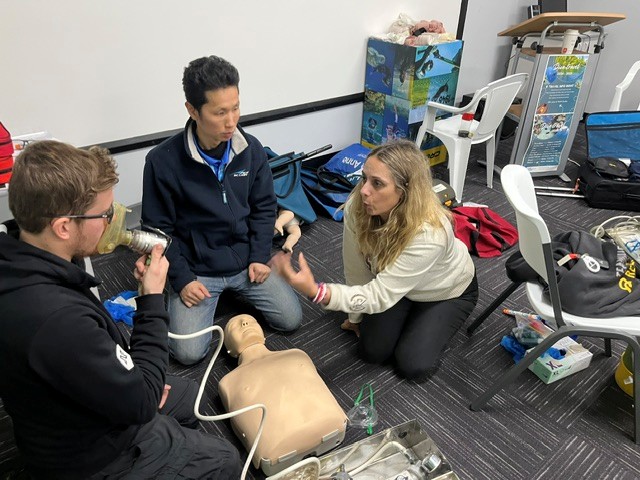
First aid is the immediate care provided to someone who has been injured or becomes suddenly ill. It can help preserve life, prevent a condition from becoming worse and support recovery while professional medical help is arranged.
First aid does not replace medical treatment. In a serious or life-threatening emergency, call triple zero (000) and follow the instructions given by the emergency call-taker.
What is first aid?
First aid may involve recognising an emergency, checking for danger, calling for assistance and providing care within your level of training. The response required depends on the person’s condition and the hazards present.
Australian first aid training follows guidance from the Australian Resuscitation Council and other recognised national clinical bodies. Trained first aiders learn how to assess an emergency, respond safely and monitor the person until further help arrives.
Why is first aid important?
Immediate help can improve outcomes
The first few minutes of an emergency can be critical. A trained person may be able to start CPR, use an automated external defibrillator, control serious bleeding or assist someone who is choking while an ambulance is on its way.
Training builds confidence
Emergencies can be stressful and confusing. Practical training helps people understand what to do, how to communicate with emergency services and how to avoid placing themselves or others in additional danger.
First aid supports workplace safety
Australian workplaces must provide access to appropriate first aid equipment, facilities and trained first aiders. The arrangements required depend on factors including workplace hazards, size, location and the number of workers.
Employers should use a workplace risk assessment to determine the number of trained first aiders and the equipment required.
What skills are covered in first aid training?
CPR and automated external defibrillators
CPR training teaches participants how to recognise when a person is unresponsive and not breathing normally, perform cardiopulmonary resuscitation and follow the prompts of an automated external defibrillator.
View HLTAID009 CPR training in Adelaide
Choking and airway emergencies
First aid training covers how to recognise a partial or complete airway obstruction and provide the appropriate response. Australian guidance uses back blows and chest thrusts for a severe airway obstruction. Abdominal thrusts are not recommended by the Australian Resuscitation Council because they can cause harm.
Bleeding and wound care
Participants learn how to respond to minor and life-threatening bleeding, apply appropriate pressure and dressings, use personal protective equipment and recognise when emergency medical assistance is required.
Read more about responding to severe bleeding
Fractures and soft-tissue injuries
Training covers the recognition and management of fractures, dislocations, sprains and strains. This may include supporting or immobilising an injured area, avoiding unnecessary movement and arranging appropriate medical assistance.
Medical emergencies
A first aid course may cover common medical emergencies including asthma, anaphylaxis, seizures, stroke, heart attack, diabetes, shock and heat-related illness. Participants learn to recognise warning signs and provide an appropriate first aid response.
Poisoning
For suspected poisoning, contact the Poisons Information Centre on 13 11 26. If the person is unconscious, having difficulty breathing, having a seizure or is seriously unwell, call triple zero (000).
Do not induce vomiting or give food, drink, medicine or activated charcoal unless specifically directed by a medical professional or the Poisons Information Centre.
Which first aid course do you need?
The appropriate course depends on your employment, industry and responsibilities. Ask your employer for the required unit code before enrolling.
- HLTAID009 Provide cardiopulmonary resuscitation focuses on CPR and the use of an automated external defibrillator.
- HLTAID011 Provide First Aid covers CPR and responses to a range of common injuries and medical emergencies.
- HLTAID012 Provide First Aid in an education and care setting includes first aid responses involving infants and children, including asthma and anaphylaxis.
- HLTAID014 Provide Advanced First Aid is intended for people who require more advanced first aid skills for their workplace or role.
Successful completion of a nationally recognised unit results in a Statement of Attainment issued by a Registered Training Organisation.
View HLTAID011 Provide First Aid course dates
First aid and White Card are separate courses
A White Card provides general construction-induction training. It does not include a nationally recognised first aid unit. Some construction workers may require both qualifications because of their employer or worksite requirements.
View White Card training in Adelaide
How often should first aid training be renewed?
The Model Code of Practice for First Aid in the Workplace recommends completing CPR refresher training annually and renewing first aid qualifications every three years.
Your employer, regulator or industry may require training more frequently. Always check the currency requirements applying to your position.
Book first aid training in Adelaide
FACT Adelaide is Registered Training Organisation 45473. We provide nationally recognised, face-to-face first aid and CPR training at 34 South Terrace, Adelaide.
Training includes practical assessment using appropriate first aid equipment and simulated emergency situations. Students receive instruction and feedback from an experienced trainer throughout the course.
View first aid course dates and enrol online
This article provides general information only and is not a substitute for accredited training or professional medical advice. In a serious or life-threatening emergency, call triple zero (000).