
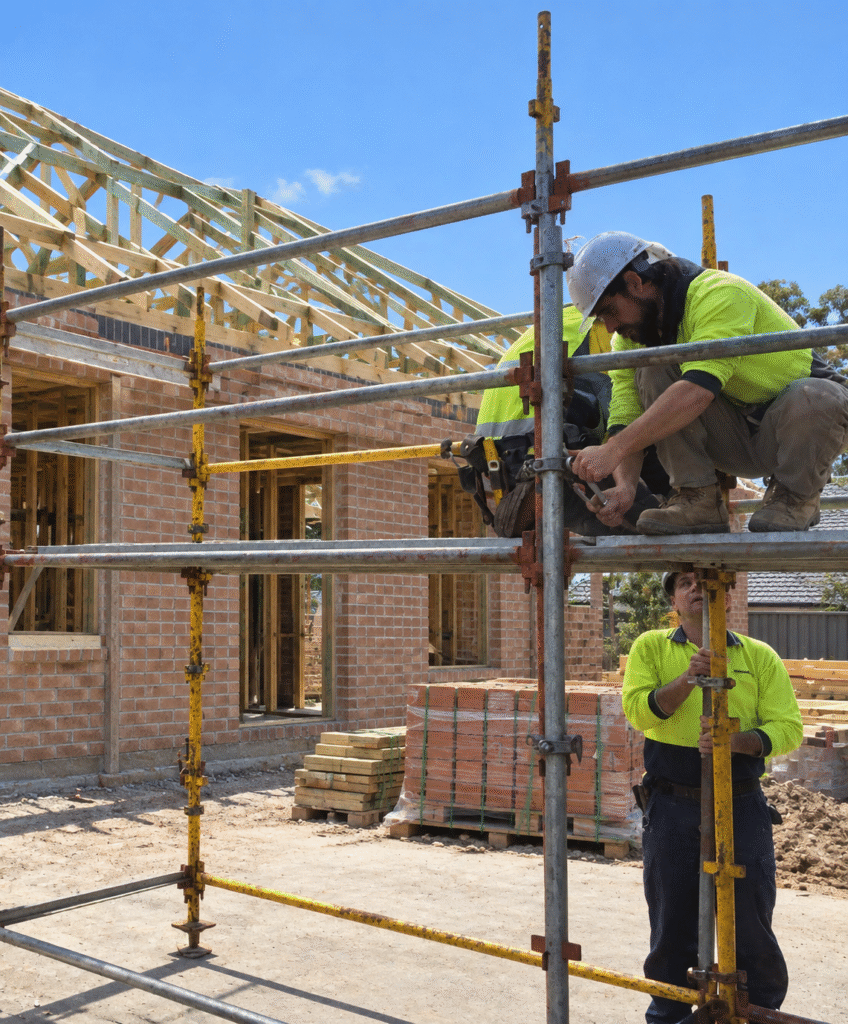
By Allan Bartlett, FACT Adelaide. Read about my journey from scaffolder to safety trainer and the experience behind these practical pointers.
Practical scaffolding tips from the job
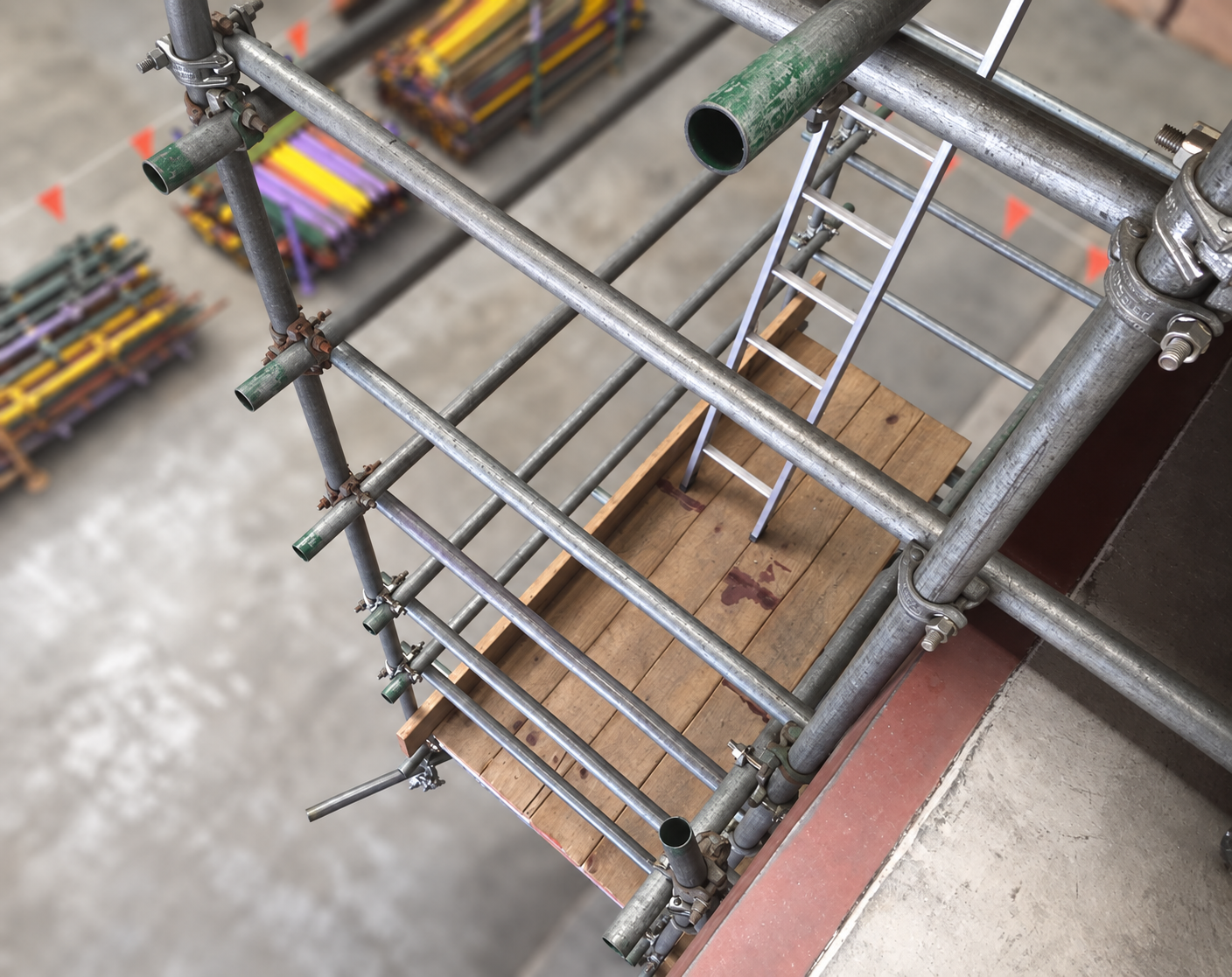
Scaffolding teaches you things that are difficult to explain from a classroom slide. The length of a standard changes how it balances when you carry it. The shape of a transom affects how you handle it. And checking a bay for square means knowing exactly where your tape measurement starts and finishes.
My background includes working as a scaffolder and teaching scaffolding. These are some of the practical details I bring into training: knowing your equipment, understanding the measurements and recognising when a job needs a closer look. The questions at the end give you a chance to test that understanding.
Handling standards of different lengths
A 1.5-metre standard, a 2-metre standard and a 3-metre standard need different amounts of space when you move them. A grip that feels balanced on one component may give you poor control over another. Fittings and the actual construction of the component also affect its balance.
Before moving it, look at the route and the space needed by both ends. A long component can strike someone or catch an obstruction even when your own path looks clear. Choose the handling method for the component, the task and the people doing it; use suitable handling aids where practicable. Ask for a demonstration rather than guessing at a shoulder position.
What the shape of a transom teaches you
One example from my experience is the T-shaped transoms I used. I could arrange two flat with their T sections pointing upwards and nest a third into the space above. The way those particular sections sat together was the useful detail, rather than simply trying to carry more pieces.
This needs to be understood for the actual equipment. Nesting parts together does not mechanically lock them or establish that three are a suitable load for someone to carry. Their combined weight, grip, stability, carrying route and available handling aids still matter. A practical demonstration with the components makes this much clearer than a promise that a particular arrangement will prevent shoulder pain.
Know the parts you are discussing
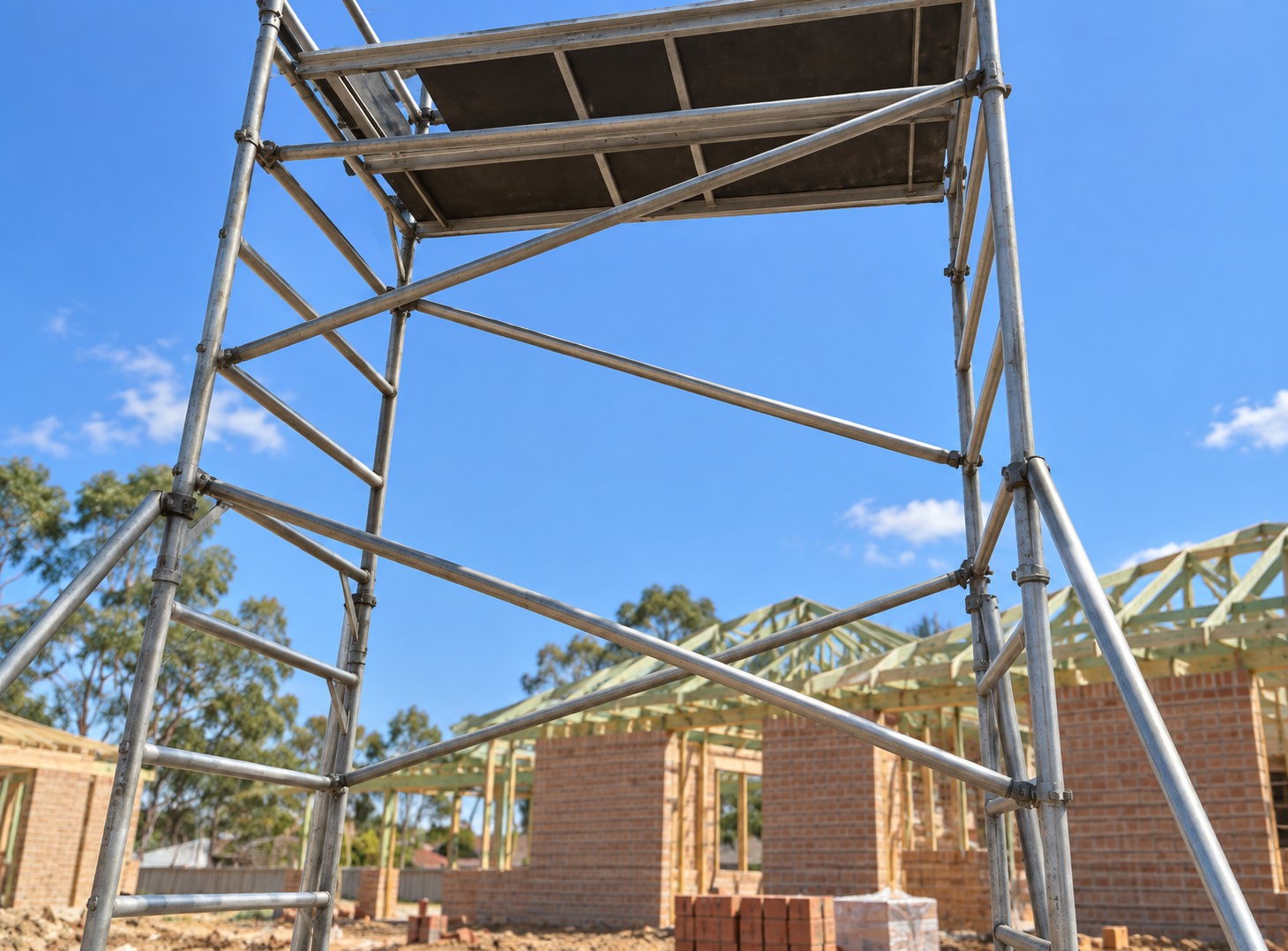
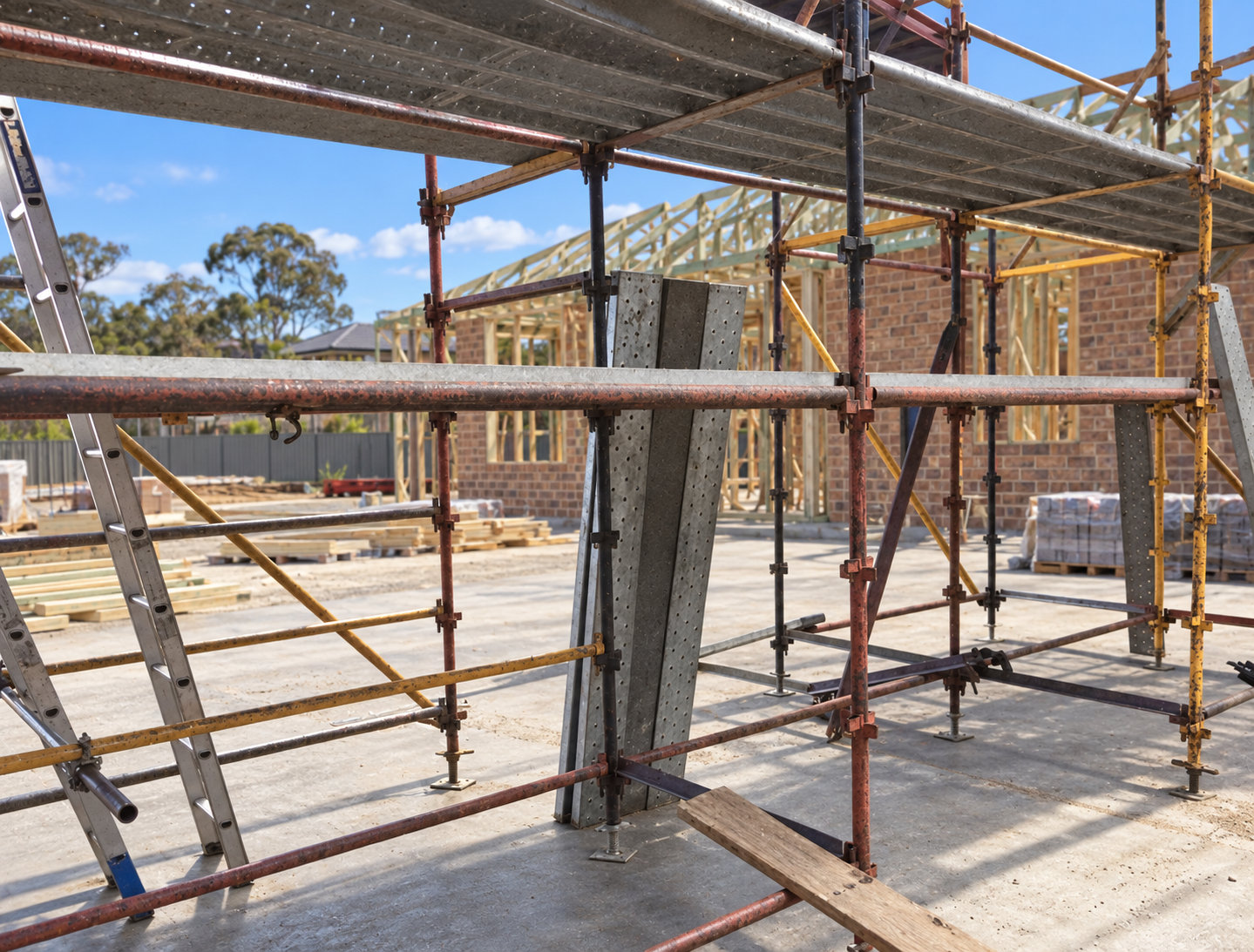
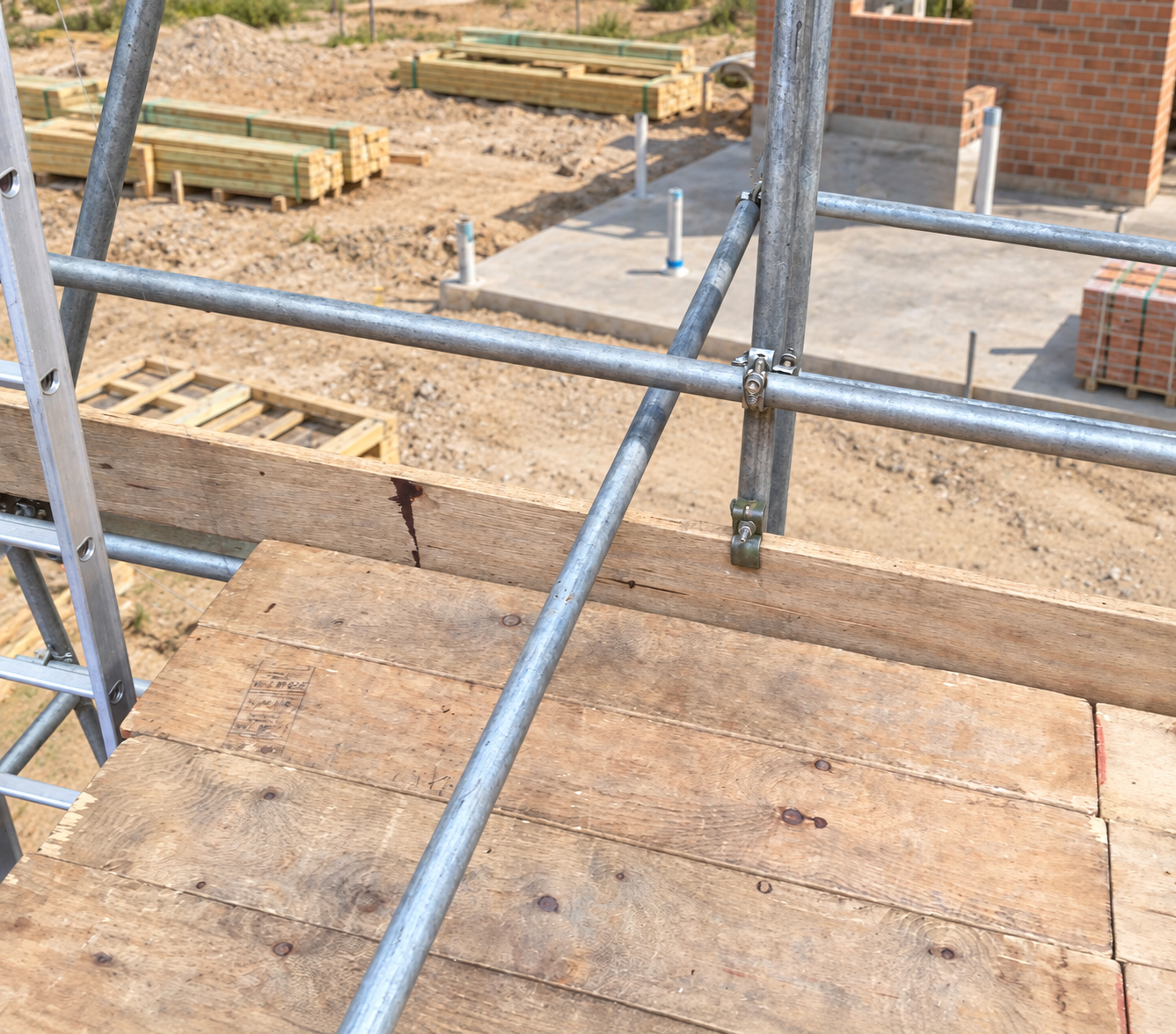
In a conventional scaffold arrangement, standards are the upright members, ledgers run along its length and transoms run across its width, commonly supporting the platform units. Learn the terms used for the system in front of you. Correct names make instructions and questions easier to understand.
SafeWork SA guidance on scaffold hazards and handling controls
Checking the setup and your measurements
A bay length alone does not give its diagonal
When someone says a “2.4 bay”, I still need to know its width and the measuring points before calculating a diagonal. The same applies to a 1.8 or 1.2 bay. A remembered number from one arrangement cannot be transferred to every other arrangement.
For a simple rectangular layout measuring 2.4 metres by 1.8 metres between defined points, the theoretical diagonal is 3 metres: 2.4² + 1.8² = 3². That is a geometry example, not a manufacturer’s scaffold dimension or an erection tolerance. Actual checks must use the design, system instructions and specified reference points.
Measuring both diagonals from corresponding points is a useful squareness check for a rectangular layout with the intended side dimensions. It does not, by itself, confirm the scaffold is level, stable, correctly braced or ready for use.
Include the tape case only when it is part of the measurement
If the back of your tape case is against the finishing point, and the measurement method requires the case length to be included, account for its verified length. If the blade already measures the whole distance between the points, do not add the case again. Be consistent about the hook, contact points and units.
Using boards as an experienced visual cross check
With experience, the way boards sit and the gaps around them can draw your attention to a layout that needs checking. That is how I would describe using boards to help check square: a visual cross-check followed by the required measurements. Board fit alone is not a substitute for the specified setup and inspection checks.
Practical pointers to take into training
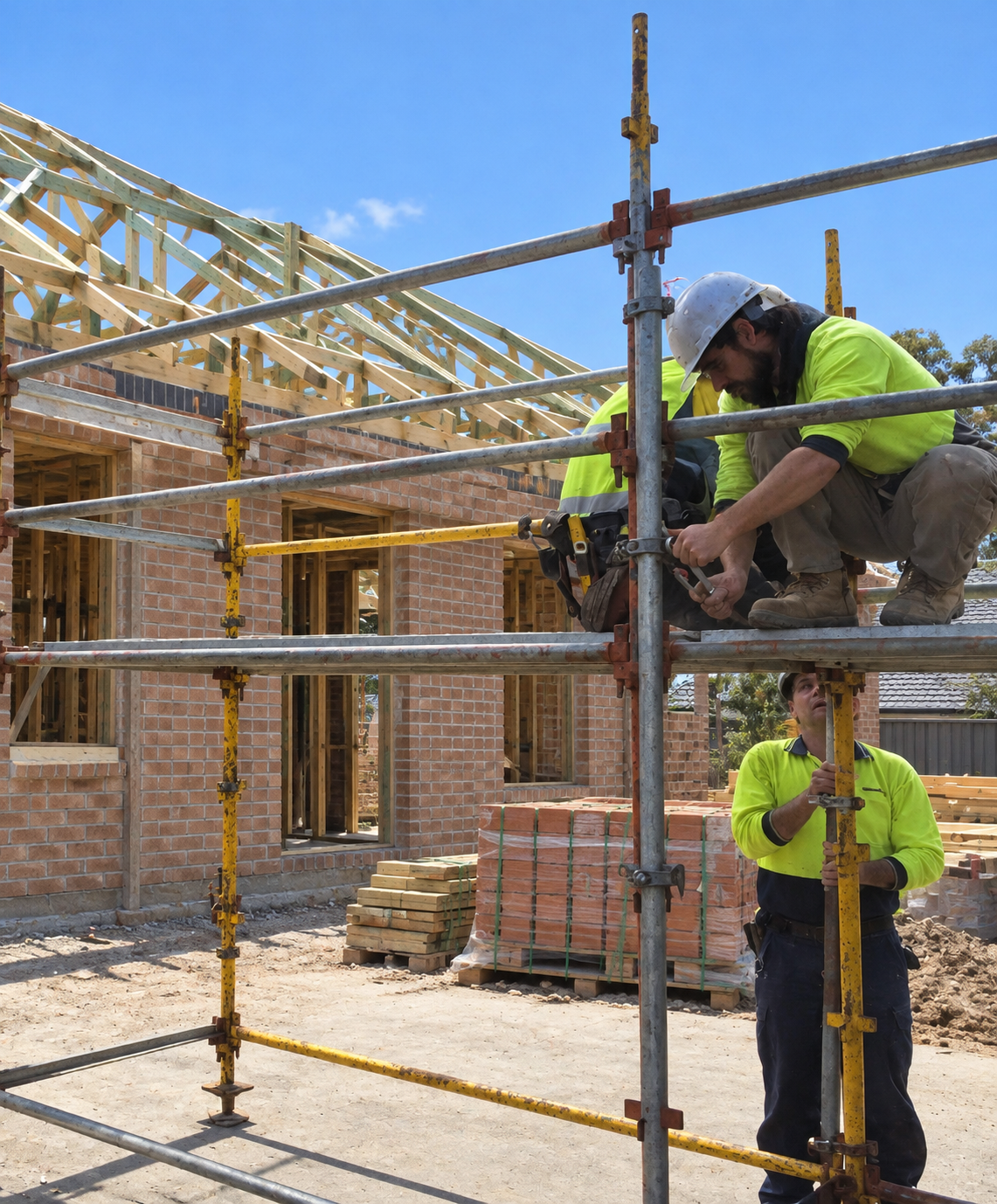
- Identify the component and plan its movement before picking it up.
- Use the same defined reference points when comparing measurements.
- Write down both bay dimensions before calculating a diagonal.
- Do not copy a remembered tolerance or measurement from a different system.
- If a component looks damaged or something does not fit as expected, stop and raise it.
Build on your White Card training
Your White Card introduces general construction safety, including recognising hazards and responding to concerns. It is separate from a scaffolding high-risk work licence. These practical pointers and the quiz support preparation; they do not replace supervised training, system instructions or competency assessment.
Start with White Card training in Adelaide
Explore Working at Heights training
View Basic Scaffolding course information and enquire about availability
Ready for your scaffolding course? Test your knowledge
Try these 16 questions: four on safety, four on setup, four on equipment and four on calculations. Select each question to reveal its answer. This is an informal learning check, not an assessment or licence test.
Safety and your White Card
1. Does a White Card, by itself, authorise you to perform scaffolding work that requires a high-risk work licence?
No. General construction induction and scaffolding licensing are separate. Check the licence requirements for the work being undertaken.
2. You notice a damaged component before it is used. What should you do?
Do not use it. Report it and arrange for it to be isolated or identified under the site procedure so it is not used before assessment.
3. Name two hazards to check along the route before carrying a long standard.
Examples include nearby people, overhead obstructions, uneven ground, trip hazards and vehicles. Consider the space needed by both ends of the component.
4. Why is wearing a hard hat not enough to control the risk of falling objects?
A hard hat does not prevent objects falling. Controls must address the source and exposure, such as suitable containment and keeping people out of the affected area.
Checking the setup
5. Why is “a 2.4-metre bay” insufficient information for calculating a diagonal?
You need the width as well as the length, plus defined measuring points. The diagonal changes when either dimension changes.
6. When comparing the two diagonals of a rectangular bay layout, what must stay consistent about your measuring points?
Use corresponding reference points, the same measurement method and consistent units. Otherwise the two readings may not be comparable.
7. Do matching diagonal measurements prove the scaffold is level, stable and correctly braced? Explain.
No. Diagonals check a particular aspect of geometry. Level, foundations, bracing, ties and other design requirements need their own checks.
8. Can boards appearing to fit square replace the required measurements and inspection checks?
No. Board fit can prompt an experienced visual check, but it does not replace the specified measurements or inspections.
Knowing the equipment
9. Which member is normally upright: a standard, ledger or transom?
A standard is normally the upright member.
10. What is the usual difference in direction between a ledger and a transom?
A ledger normally runs along the scaffold’s length; a transom runs across its width and commonly supports platform units. Check the particular system.
11. Why might a 3-metre standard need a different handling approach from a 1.5-metre standard?
The longer component needs more clearance and can be harder to control. Assess its actual weight, balance, fittings, route and suitable handling method.
12. If three transoms nest neatly together, does that make them a secured and suitable load for one person? Explain.
No. Nesting is not mechanical restraint. Suitability still depends on combined weight, stability, control, the task and the person; consider handling aids.
Working with calculations
13. Convert 1.5 metres, 2 metres and 3 metres into millimetres.
1.5 m = 1,500 mm; 2 m = 2,000 mm; 3 m = 3,000 mm.
14. For this exercise only, each transom weighs 12 kg. What is the combined mass of three? Does that calculation establish that one person should carry them?
3 × 12 = 36 kg. No: combined mass alone does not establish a safe individual handling method.
15. A theoretical rectangular layout measures 2.4 m by 1.8 m between defined points. Calculate the diagonal using the square root of length squared plus width squared.
Square root of (2.4² + 1.8²) = square root of (5.76 + 3.24) = square root of 9 = 3 m, or 3,000 mm. This is theoretical geometry, not a scaffold-system tolerance.
16. For a hypothetical measurement, the exposed blade reads 2,900 mm and the verified tape-case length is 100 mm. The case occupies the remaining distance to the endpoint. What is the total? Would you add the case if the blade already spanned both endpoints?
2,900 + 100 = 3,000 mm. If the blade already spans both endpoints, do not add the case length; doing so would double-count it.
Check the guidance and take your next step
Read SafeWork SA’s White Card guidance, SafeWork SA’s scaffolding guidance and Safe Work Australia’s scaffolding resources. Bring any questions you found difficult to training.
View White Card training dates in Adelaide