
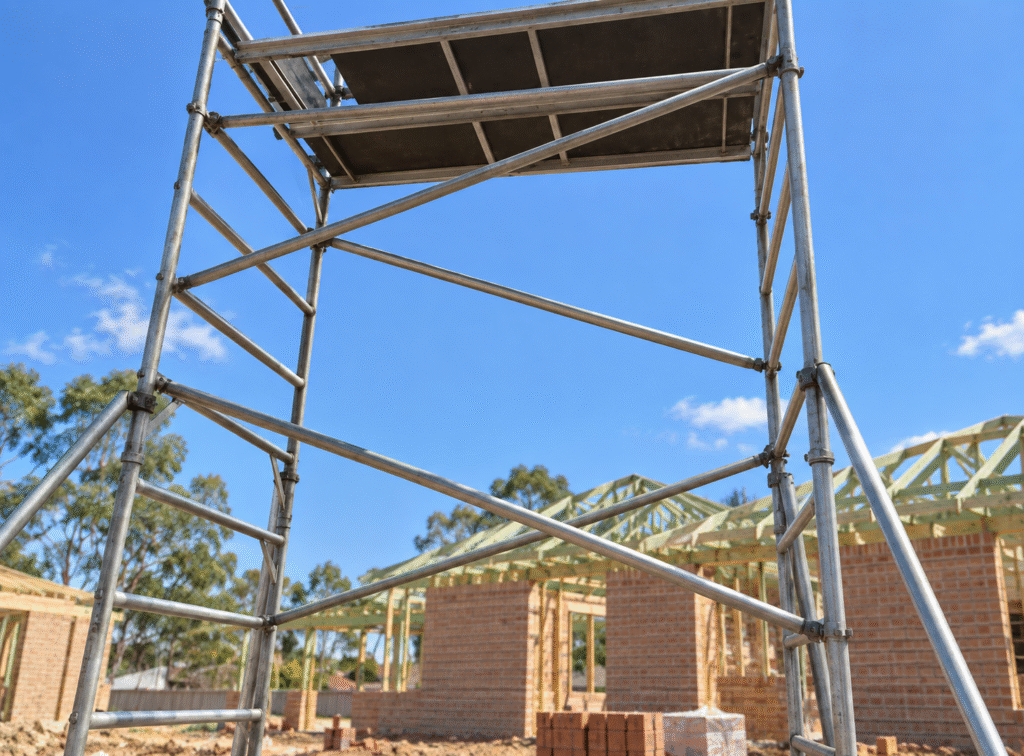
By Allan Bartlett, FACT Adelaide. If you work around construction sites, you have probably walked past scaffolding hundreds of times. But could you identify the system you are looking at and name the main components?
This article is part of our practical construction-safety series. If you missed the first one, start with Practical Scaffolding Tips and 16 Questions to Test Your Knowledge.
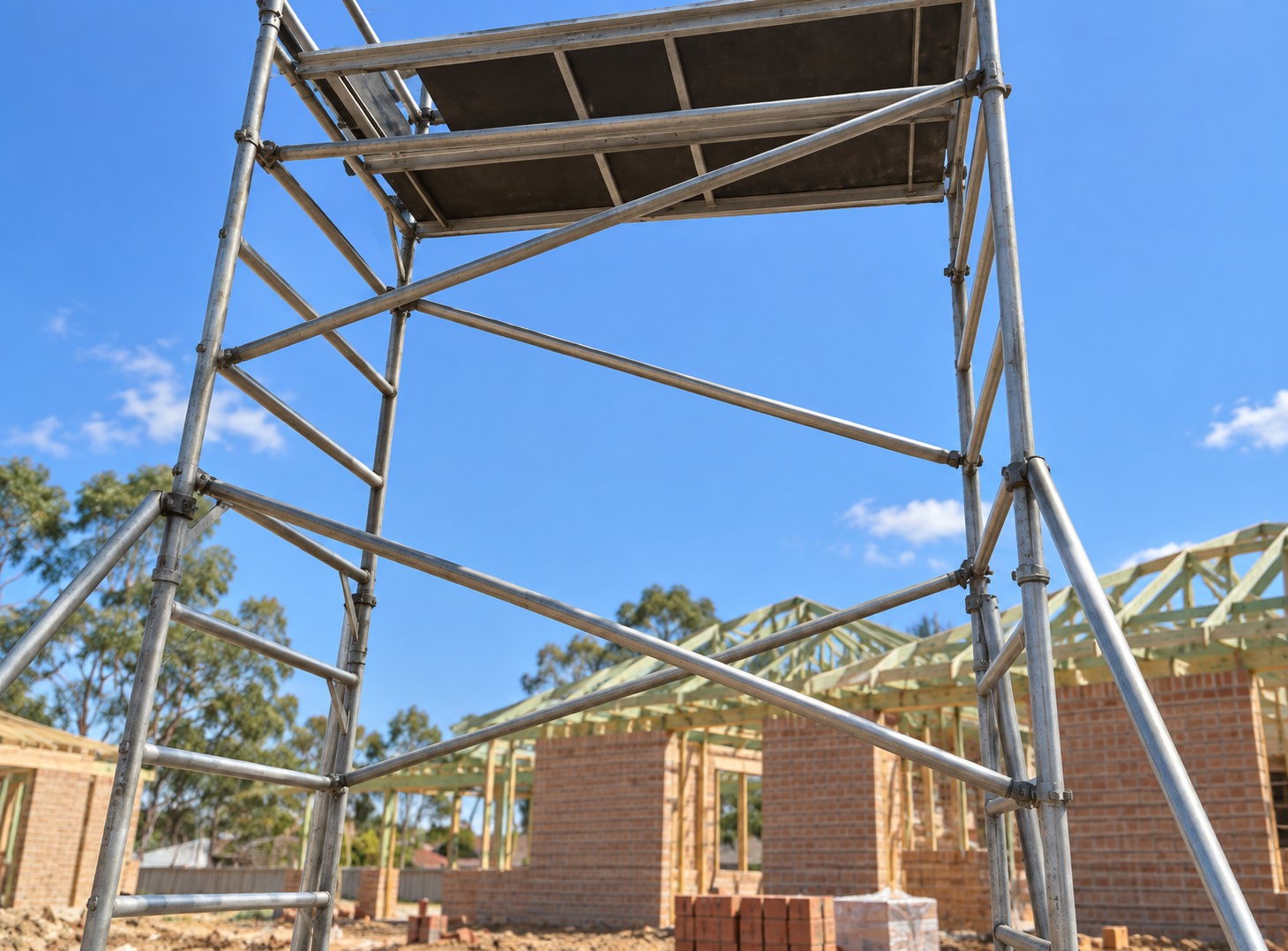
First question: what scaffold system are you looking at?
There are several scaffold systems used across construction. They can look quite different, but the basic principles remain the same: the scaffold must provide a stable structure and safe working platform, and every component has a job to do.
Modular scaffold
Modular scaffold uses purpose-made connection points built into the components. Depending on the manufacturer and system, you may see cup-style, wedge-style or rosette/ring-style connections.
One of the first useful skills is learning to look at the connection point and recognise the type of system in front of you. The exact component names and erection requirements must always follow the system being used and the manufacturer’s instructions.
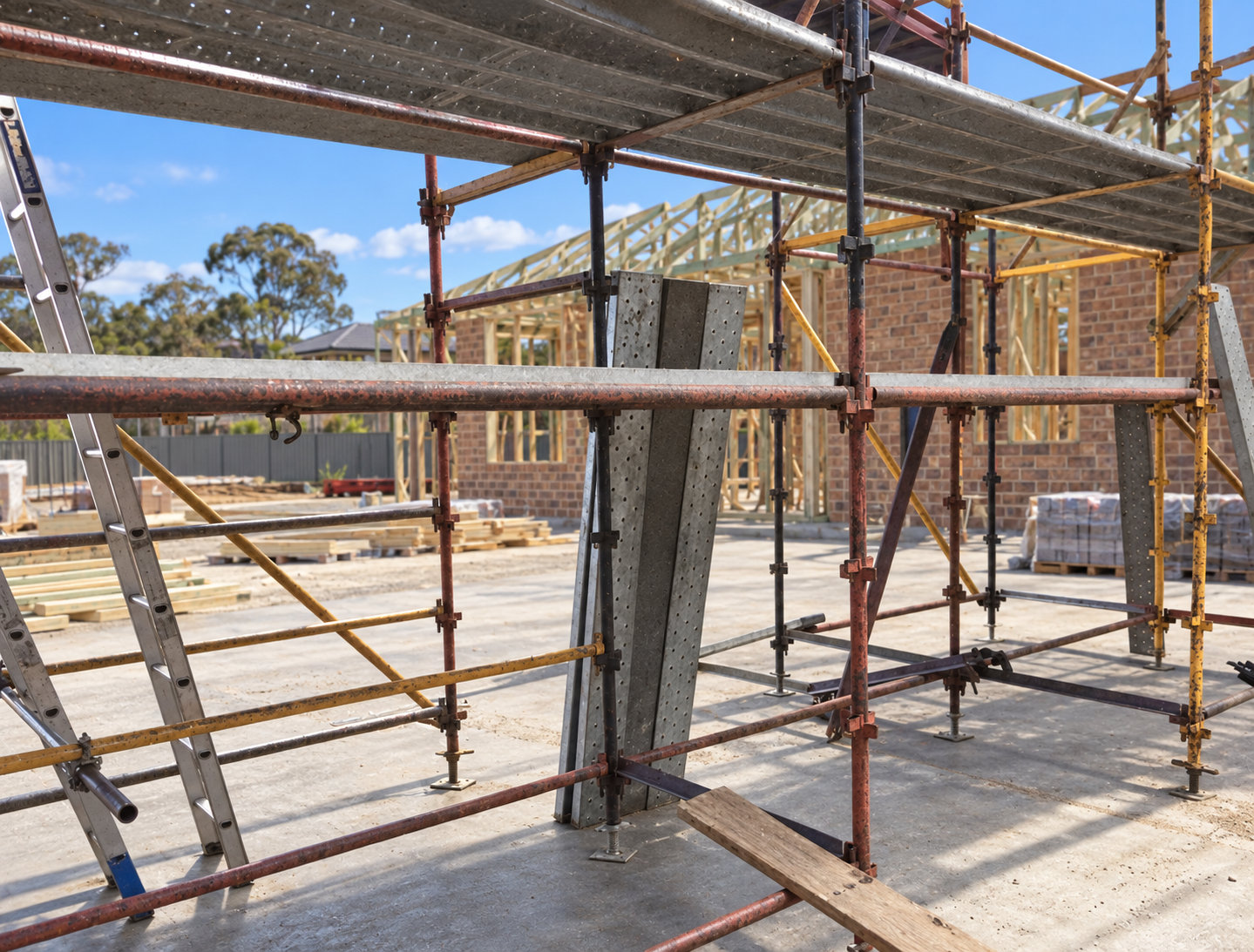
Tube and fitting scaffold
Tube and fitting looks different because separate fittings are used to join the scaffold tubes. Common examples include right-angle couplers and swivel couplers.
This gives scaffolders flexibility when working around unusual structures, shapes and site conditions, but it also makes correct component selection and setup especially important.
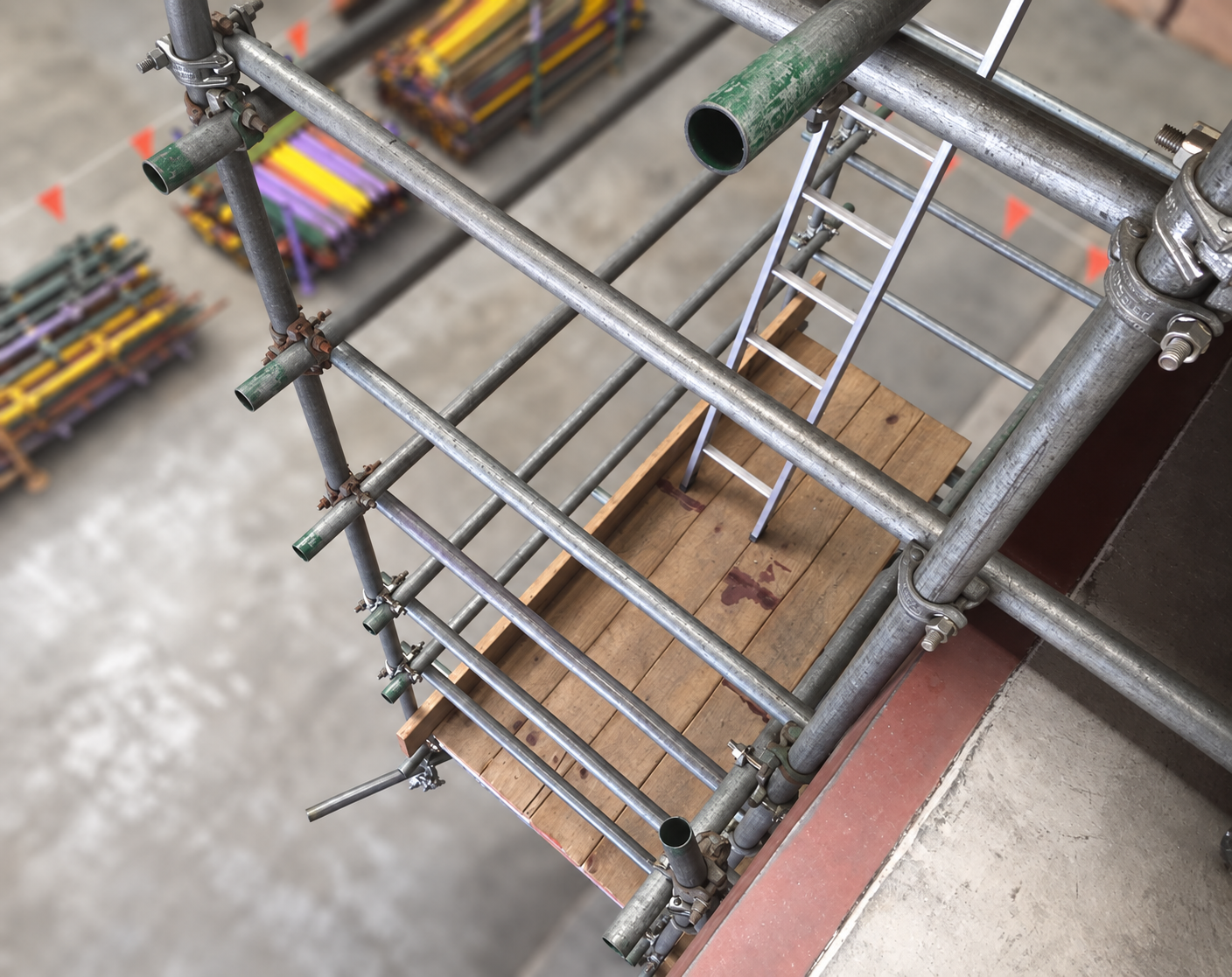
Know the main scaffold components
Whatever scaffold system you are looking at, there are some basic component names anyone working around scaffolding should recognise.
Standard
The standard is the vertical member. It transfers load down through the scaffold toward the supporting ground or structure.
Ledger
The ledger is the horizontal member running along the length of the scaffold.
Transom
The transom runs across the width of the scaffold and commonly helps support the working platform.
Brace
A brace provides stability and helps prevent the scaffold from distorting. Diagonal bracing is one of the easiest components to recognise visually.
Screw jack or base jack
A screw jack, often called a base jack, provides adjustment at the base of the scaffold. Adjustment does not remove the need for suitable foundations and correct setup.
Sole board or sole plate
A sole board or sole plate helps distribute scaffold loads into the supporting ground. Ground conditions matter. A scaffold is only as good as the support beneath it.
Scaffold board or deck
Boards or deck units form the working platform. Their type, support and installation depend on the scaffold system and the work being undertaken.
Guardrail, midrail and toe board
Guardrails and midrails form part of the edge-protection system. Toe boards help prevent tools, materials and other objects being kicked or falling from the platform.
Test yourself before looking at the answers
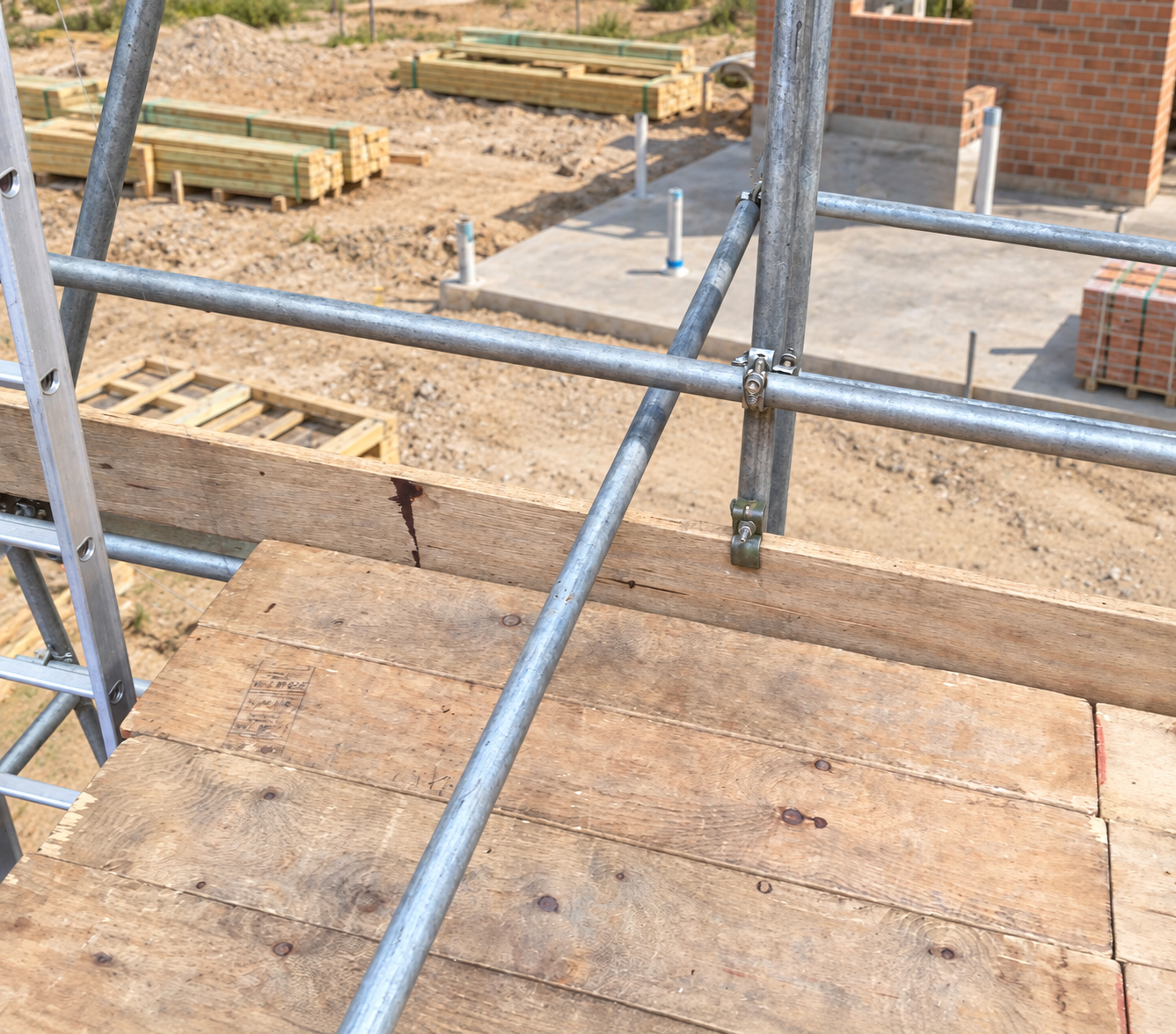
Look at the scaffold photographs above and see if you can answer these questions:
- Which members are the standards?
- Which members are the ledgers?
- Can you identify the transoms?
- Where is the diagonal bracing?
- Can you see the working platform and edge protection?
- What type of connection system can you see?
Show the component answers
Standards are the vertical members. Ledgers run along the scaffold. Transoms run across it. Braces are the diagonal members. The platform is the decked working surface, with guardrails, midrails and toe boards forming part of the edge-protection arrangement where required.
A practical scaffolder’s tip: lay the gear out with a plan
When scaffold gear is laid out ready for erection, experienced scaffolders do not just throw everything into a pile. Think about the sequence in which components will be needed and leave sensible working space between them.
On jobs I have worked on, even small layout habits made the erection process more organised and reduced unnecessary handling. The exact layout will depend on the scaffold system, the site, access and the manufacturer’s requirements, but the principle is simple: organise the gear before you start building.
White Card is the beginning, not the end
A White Card provides the general construction induction foundation needed to carry out construction work. It does not make someone a scaffolder.
Workers may then build their skills through training such as Working Safely at Heights and, where their work requires it, formal high-risk work scaffolding training.
SafeWork SA states that scaffolding work involving a platform or structure from which a person or object could fall more than four metres is high-risk work requiring the appropriate high-risk work licence. Read SafeWork SA’s scaffolding guidance.
Build your construction-safety knowledge with FACT Adelaide
Basic Scaffolding course information
This article is general training information and does not replace site procedures, manufacturer instructions, supervision or competency assessment.