
A basic scaffolder does much more than join tubes and place platforms. The job is about building a safe working structure in the right sequence, checking it as it develops and protecting the scaffold crew as well as everyone who will use or work near it.
The licence gives you a defined scope of high risk work. It also brings responsibility. You need to understand the design or scaffold plan, recognise when the job is outside your licence class and be prepared to stop when conditions are not right.
Plan before the first component moves
Before erection starts, the team needs a clear picture of the scaffold, its purpose and the conditions around it. That includes intended loads, access, ties, public or vehicle interfaces, overhead hazards, ground conditions and the order of construction.
- Confirm that the scaffold type and work are within the basic scaffolding scope
- Review the plan, manufacturer information and site requirements
- Inspect components and isolate damaged or incompatible equipment
- Set the exclusion zone and organise the laydown area
- Agree on communication, lifting and material-handling methods
Foundations come first
A scaffold can only perform properly when its foundation can support it. The scaffolder checks the ground, considers settlement and drainage, and uses suitable sole boards, base plates or adjustable base jacks as required by the system, plan and site conditions.
This is not a stage to rush. A small error at ground level becomes harder to correct as the scaffold rises. If the foundation is uncertain, the build stops until the issue is resolved.
The first bay sets the standard
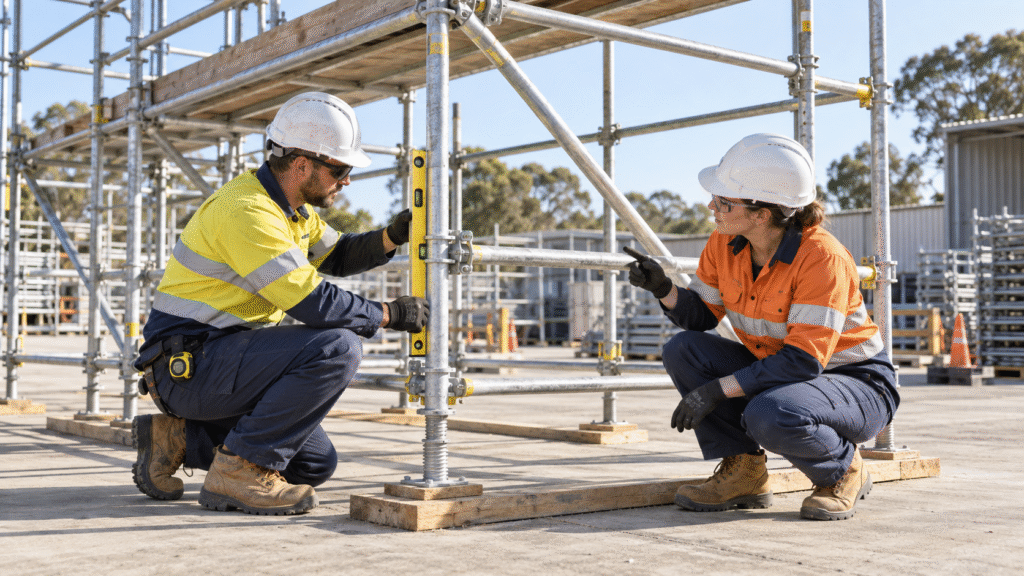
The first bay establishes the line, level and dimensions for the rest of the scaffold. Standards need to be correctly positioned, ledgers and transoms fitted in sequence, and the bay checked for level and square. Bracing is installed as the scaffold develops so the structure is stable during erection, not only when it is finished.
Why this matters: If the first bay is out, every bay that follows can compound the problem. Taking a few extra minutes to check the base, level and square is usually faster than trying to correct a full run later.
Build safe access and working platforms
Platforms, edge protection and access are not finishing touches. They are part of the safe build sequence. A basic scaffolder considers when each lift becomes accessible, how incomplete areas are controlled and how the crew remains protected while the scaffold is being erected, altered or dismantled.
- Install platforms and components in the required sequence
- Provide guardrails, midrails and toeboards where required
- Keep access clear and prevent unauthorised use of an incomplete scaffold
- Maintain the specified bracing, ties and bay dimensions
- Control dropped-object risks and materials stored on platforms
Work as one crew
The scaffolder above and the ground crew below depend on each other. Clear calls, controlled passing of materials and good housekeeping keep the sequence efficient. Nobody should be pressured to catch an unexpected component, work below uncontrolled overhead activity or guess what the next instruction means.
A competent scaffolder also watches the wider site. Weather, mobile plant, excavations, other trades and changes to the structure can all affect the work. When conditions change, pause and reassess.
Inspect as you build
Inspection is continuous. Check connections, standards, ledgers, transoms, braces, platforms, access, edge protection, ties and foundations as the scaffold develops. Before handover, the scaffold must match the plan and be suitable for its intended use.
Handover does not mean the scaffold can be altered by anyone who wants more room. Alterations need to be controlled and completed by appropriately licensed people. Scaffolds also require inspection at the times required by site procedures and applicable legislation, including after events that may affect their stability.
Stay within the basic scope
Basic scaffolding covers specific scaffold types and configurations. Some structures, including more complex suspended, cantilevered or specialised work, may require an intermediate or advanced scaffolding licence. The correct answer is not to improvise. Check the scope, the design and the licence requirements before proceeding.
Training is the start of competent practice
Good training teaches the principles, the sequence and the safe habits behind the work. Competence then grows through supervised practice, careful planning and experience across different sites. A White Card is the entry requirement for construction work, while Working Safely at Heights training supports fall-risk awareness. Neither replaces the scaffolding high risk work licence required for the licensed work.
Train for the work you want to do. FACT Adelaide delivers practical White Card, Working Safely at Heights and Basic Scaffolding training. Contact us to discuss course entry requirements and the pathway that suits your experience.
General information only. Always follow current workplace procedures, manufacturer instructions, engineered designs, site requirements and applicable legislation. This article is not a substitute for formal training, supervision or assessment.