
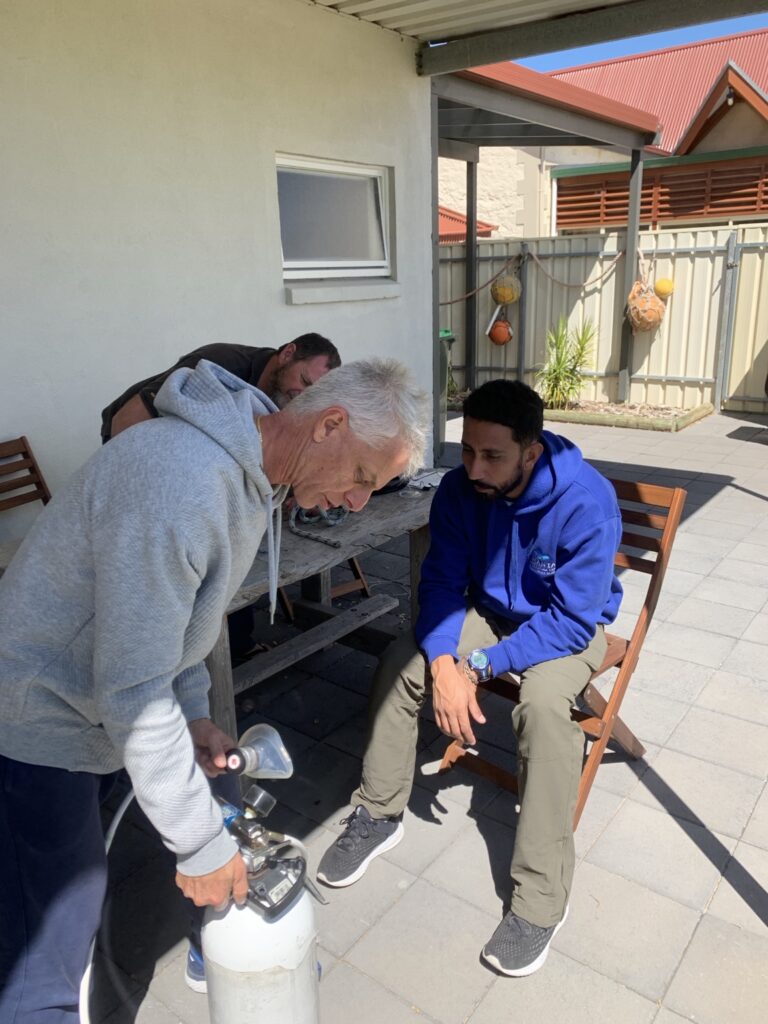
Oxygen cylinder safety matters whenever medical oxygen is kept for emergency use. Medical oxygen can be invaluable during a serious emergency. It is used in workplaces, first aid rooms, aquatic facilities, dive operations and other settings where trained responders may need to support a casualty until paramedics take over.
But having an oxygen kit is not the same as being ready to use it safely.
Through years of diving and workplace safety training, one point I repeat is that oxygen equipment is straightforward only when people understand the hazards, check the system properly and stay within their training. A rushed response, poorly stored cylinder or contaminated fitting can turn useful emergency equipment into another hazard.
Oxygen training at FACT Adelaide is delivered by Allan Bartlett, PADI Course Director #621430, who has also earned PADI Silver Course Director recognition. A PADI Course Director holds PADI’s highest professional instructor rating and is qualified to train and mentor diving instructors. The Silver recognition reflects professional-level instructor training activity. This background brings substantial practical experience in oxygen equipment, emergency response and training people to perform safely under pressure.
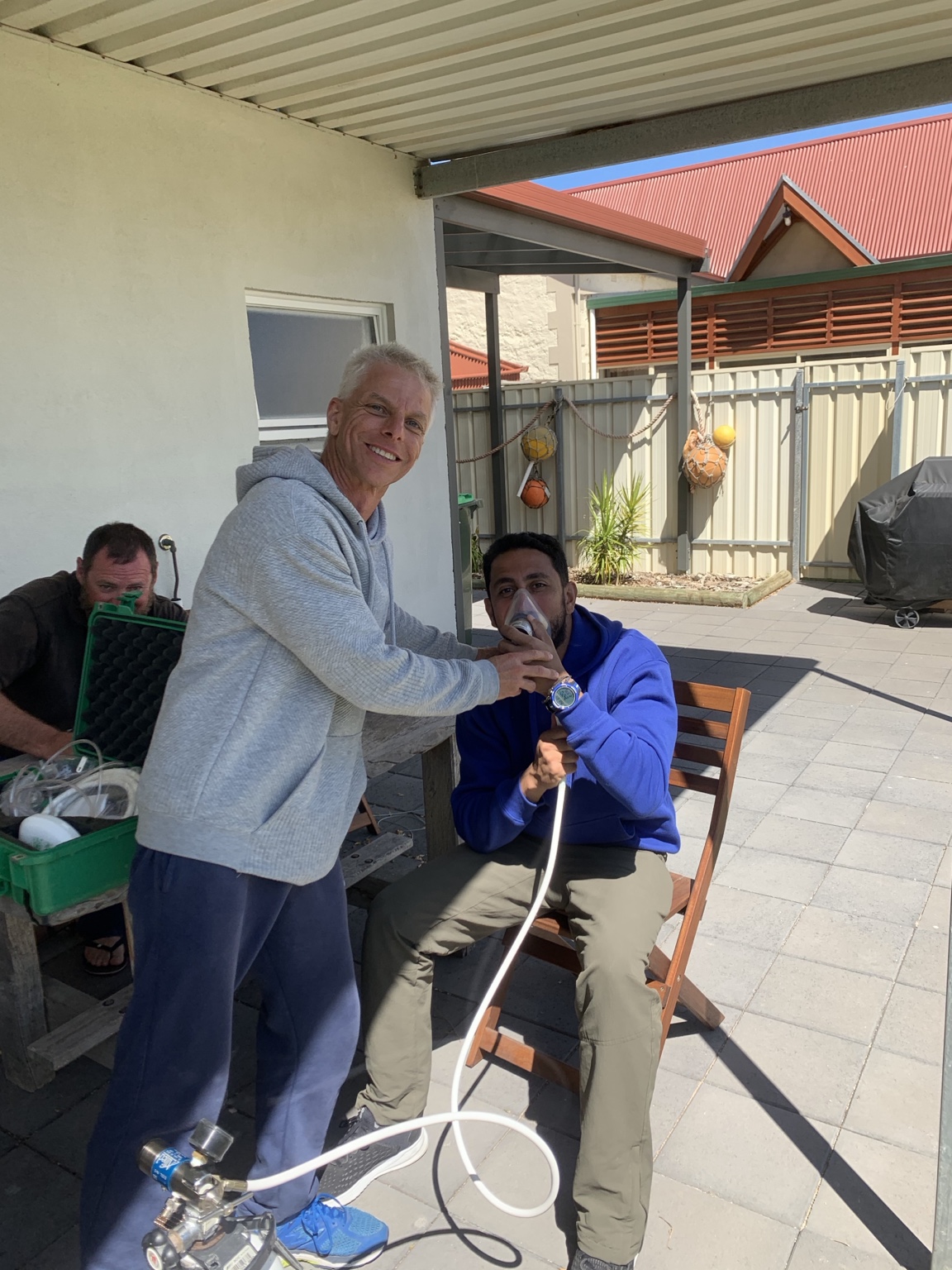
Here are seven oxygen cylinder safety mistakes worth preventing.
First: oxygen does not burn, but it changes how things burn
Oxygen is not a flammable gas. It does not ignite by itself. However, it supports combustion, and an oxygen-enriched environment can cause other materials to ignite more readily and burn much more intensely.
That distinction matters. Calling oxygen “flammable” is technically wrong, but treating it casually around fuel, heat or ignition sources is dangerous. Australian workplace guidance classifies oxygen as an oxidising gas and requires it to be kept away from combustible materials.
1. Allowing smoking, flames or sparks near oxygen
The most obvious mistake is also one of the most serious: allowing a cigarette, vape, candle, heater, grinder, welding activity or other ignition source near oxygen equipment.
Oxygen can accumulate around a leaking connection, mask, clothing or nearby material. Something that might normally smoulder can burn rapidly when oxygen concentration is increased.
Keep oxygen equipment well clear of:
- smoking and vaping;
- open flames and candles;
- hot work, sparks and grinding;
- portable heaters and hot surfaces; and
- fuels, solvents and other combustible materials.
If oxygen has been used or may be leaking, control ignition sources, ventilate the area and follow the equipment supplier’s emergency procedures.
2. Getting oil or grease on valves and regulators
Oil, grease and oxygen equipment are a dangerous combination. Never lubricate a medical oxygen valve, regulator or connection unless a manufacturer expressly specifies an oxygen-compatible product and an authorised person performs the work.
Hands, gloves, tools and work surfaces should be clean before oxygen equipment is handled. Do not use fittings contaminated by grease, fuel, petroleum products or oily rags.
If a valve or regulator is stiff, damaged or contaminated, take it out of service. Forcing it or reaching for a general-purpose lubricant is not a repair.
3. Leaving the cylinder unsecured
An oxygen cylinder contains gas under high pressure. If it falls and the valve or regulator is damaged, the release of pressure can cause serious injury and turn the cylinder into a dangerous moving object.
Cylinders should be:
- restrained so they cannot fall;
- kept upright unless the manufacturer specifies otherwise;
- protected from impact and heavy traffic;
- moved using suitable equipment rather than dragged or rolled; and
- secured during transport in accordance with supplier instructions and applicable dangerous-goods requirements.
Do not leave a cylinder leaning against a wall, loose in a vehicle or sitting where it can be knocked over during an emergency.
4. Storing oxygen near heat, sunlight or combustible material
Oxygen cylinders should be stored in a secure, dry and well-ventilated location, protected from artificial heat, impact and incompatible materials. Compressed gas cylinders may rupture if exposed to excessive heat, while an oxygen leak can intensify a nearby fire.
Good storage also means keeping the area tidy. Cardboard boxes, paper, oily cloths, fuel and unnecessary equipment increase the fire load and can obstruct emergency access.
Workplaces should base their storage arrangements on the cylinder supplier’s instructions, the safety data sheet, their risk assessment and the requirements that apply to the quantity and type of gas stored.
5. Forcing connections or using the wrong equipment
Oxygen systems are designed with specific cylinders, regulators, seals, tubing and delivery devices. A connection that does not fit is a warning—not an invitation to use more force or improvise an adaptor.
Before use, check that:
- the regulator is designed for the cylinder and intended application;
- seals and connections are clean and undamaged;
- tubing and masks are intact and within their service dates;
- the pressure gauge and flow controls operate correctly; and
- the kit has not been modified with unapproved parts.
Damaged or incompatible equipment should be labelled, isolated and assessed by a competent service provider.
6. Skipping the pre-use and post-use checks
An oxygen kit should not be discovered empty, damaged or incomplete when somebody is struggling to breathe.
A regular equipment check should confirm that the cylinder contains enough oxygen for the foreseeable response, the regulator and delivery equipment are present, consumables are sealed and in date, and the kit is accessible to trained responders.
After use, follow the manufacturer’s shutdown procedure. This generally includes closing the cylinder valve, safely releasing residual pressure from the system where specified, returning controls to the correct position, replacing used consumables and recording the use so the cylinder can be refilled or replaced.
Your workplace inspection schedule should reflect the supplier’s instructions, the frequency of use and the risks of the setting. A signed checklist is useful only if someone actually inspects the equipment.
7. Giving oxygen without training—or delaying basic life support
Oxygen is not a substitute for casualty assessment, CPR, an AED or an ambulance.
The Australian and New Zealand Committee on Resuscitation states that supplemental oxygen in first aid should be administered only by people with specific training. It also makes clear that basic life support must not be delayed while somebody fetches or assembles oxygen equipment.
If a casualty is unresponsive and not breathing normally:
- Send for an ambulance and an AED.
- Start CPR without delay.
- Use the AED as soon as it is available.
- Add oxygen equipment only when an appropriately trained responder and suitable equipment are available.
ANZCOR also advises that a person who requires supplemental oxygen in a first aid setting needs assessment by a healthcare professional, so an ambulance should be called.
A quick oxygen safety check for workplaces
- Is the cylinder secured and protected from impact?
- Is the storage area ventilated and clear of heat, flames and combustible material?
- Are the valve, regulator and connections clean and free from oil or grease?
- Is the correct regulator fitted, with compatible masks, tubing and other equipment?
- Is there enough oxygen in the cylinder?
- Are consumables sealed, complete and within date?
- Are trained responders available, and do they know where the equipment is?
- Is there a documented inspection, maintenance and replacement process?
- Does the emergency plan make clear that calling 000, CPR and AED use are not to be delayed?
Training turns oxygen equipment into a real capability
Buying an oxygen kit may tick a box, but it does not create a capable emergency response. People need to recognise when oxygen may be indicated, assemble and operate the equipment safely, select an appropriate delivery method, monitor the casualty and give a clear handover to paramedics.
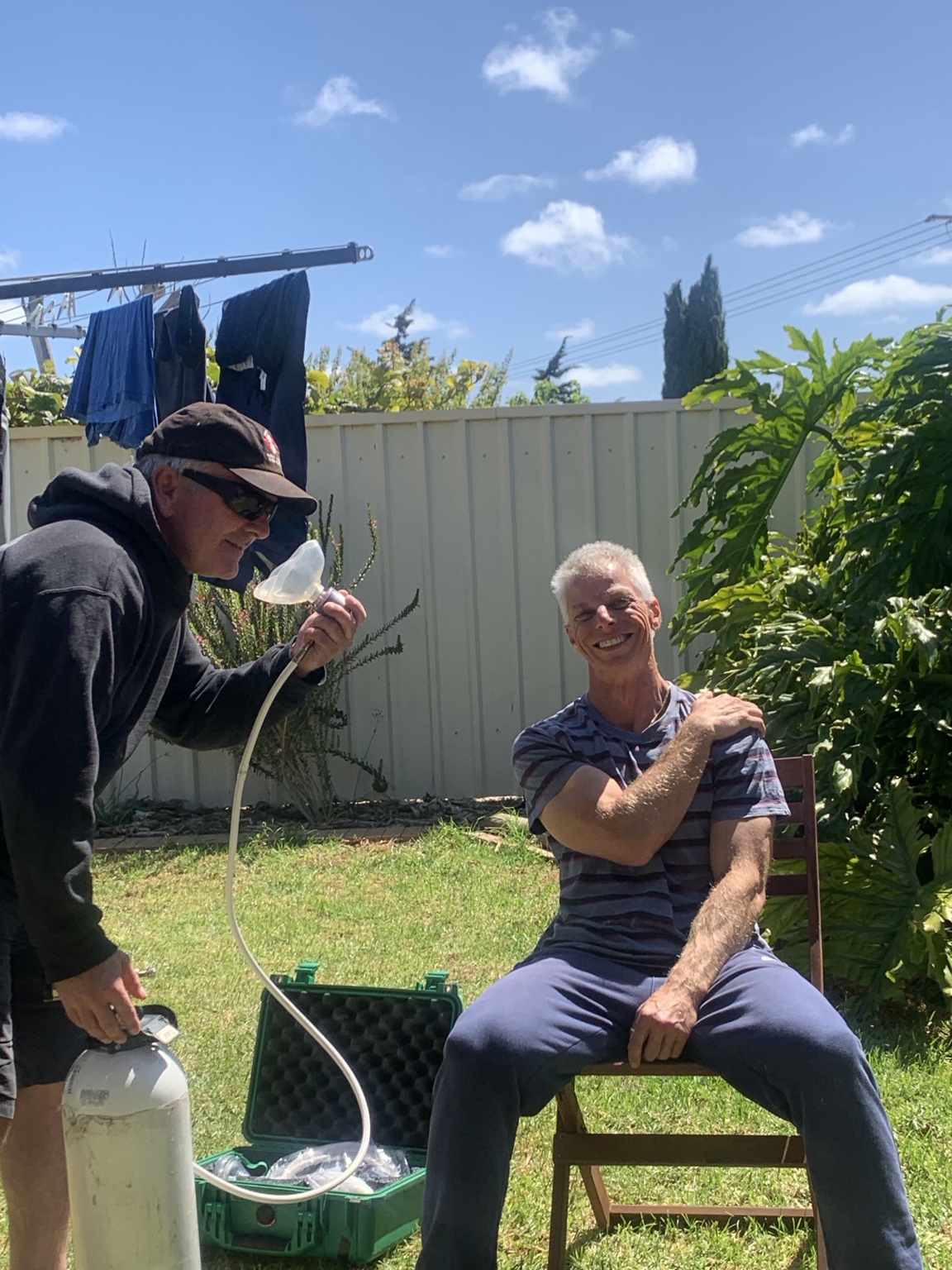
HLTAID015 Provide advanced resuscitation and oxygen therapy in Adelaide develops those skills through practical training with specialised resuscitation and oxygen equipment.
If your workplace holds oxygen equipment—or operates in health, care, aquatic, diving, remote or higher-risk environments—review both the equipment and the competence of the people expected to use it.
Need oxygen and advanced resuscitation training in Adelaide? Contact FACT Adelaide on (08) 7226 5936 or view the HLTAID015 course page to check upcoming sessions.
Important: This article provides general safety information. It does not replace accredited training, manufacturer instructions, workplace procedures, a safety data sheet or advice from emergency services or a healthcare professional.
Authoritative references
- ANZCOR Guideline 9.2.10 – The Use of Oxygen in Emergencies
- WorkSafe Victoria – Gas storage at public events
- WorkSafe Queensland – Labelling of workplace hazardous chemicals Code of Practice 2021
- Training.gov.au – HLTAID015 Provide advanced resuscitation and oxygen therapy